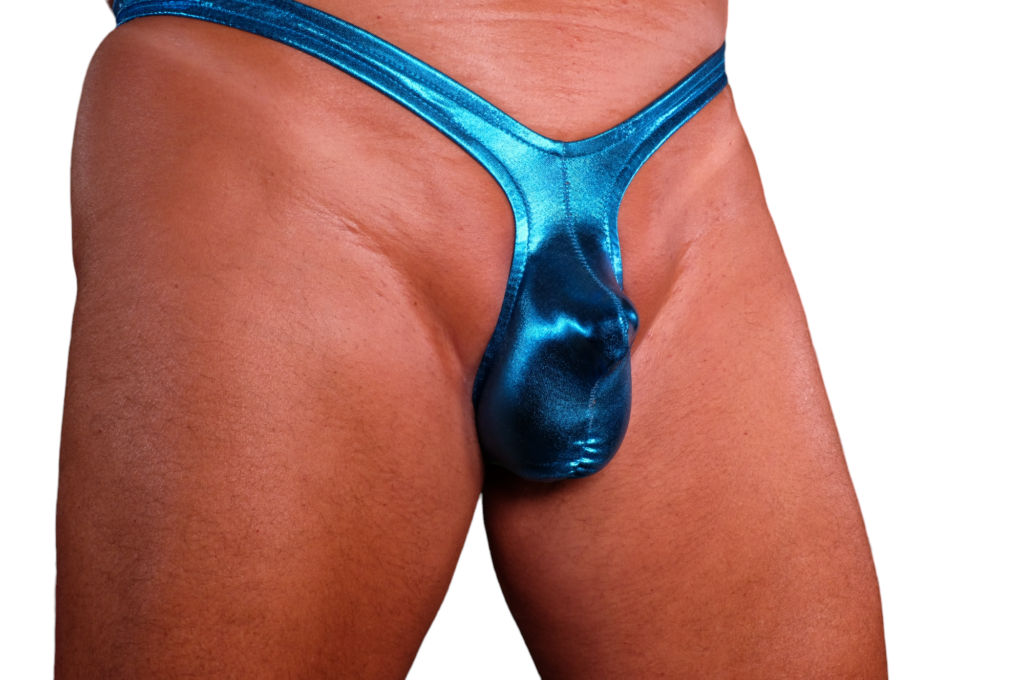

Swimwear for Men: The Best Styles from Bikinis and Thongs to G-Strings, Pouch-Only and Micro Designs
Men’s swimwear has become far more diverse than the traditional board shorts and basic racing briefs that dominated beaches for decades. Men who prefer form-fitting swimwear can now choose from bikinis, thongs, G-strings, micro bikinis, pouch-only suits and ultra-minimal designs that use remarkably little fabric.
That variety is important because there really isn’t one “best” swimsuit for every man. The best style depends on where you plan to wear it, how much coverage you want, how much support you need and how adventurous you want your beach or pool look to be.
For some men, a classic bikini is the ideal combination of comfort and sex appeal. Others prefer the nearly unrestricted feeling of a thong or G-string. At the extreme end of the spectrum are micro and pouch-only swimsuits designed around the idea that a swimsuit can provide only the coverage necessary for the wearer.
Here is a closer look at the major styles.
The Men’s Swimwear Revolution
One of the biggest changes in men’s swimwear is simply the amount of choice now available.
Traditional men’s swimwear generally emphasized coverage. Board shorts, trunks and loose swim shorts could extend halfway toward the knee. Even competitive swim briefs were frequently viewed primarily as athletic garments.
Modern swimwear gives men another option: treating the swimsuit as fashion.
Stretch fabrics such as Lycra and spandex make it possible to create suits that closely follow the body’s contours while remaining flexible enough for swimming. Designers can therefore experiment with narrower sides, higher leg openings, smaller backs and increasingly minimal fronts.
That has created a spectrum of swimwear ranging roughly from:
Swim briefs → bikinis → micro bikinis → thongs → G-strings → pouch-only and ultra-micro designs.
The differences aren’t merely about how much skin is exposed. Each design creates a noticeably different appearance and wearing experience.
1. Men’s Bikini Swimsuits: The Versatile Choice
For men interested in moving beyond conventional swim briefs, the bikini is one of the easiest places to start.
A men’s bikini normally features relatively narrow sides, high-cut legs and considerably less fabric than conventional trunks. Unlike a thong, however, it retains substantial rear coverage.
There are numerous variations.
A conservative bikini may provide enough coverage to feel similar to a small racing brief. A Brazilian-style bikini can have narrower sides and reduced rear coverage. String bikinis take things further by replacing much of the waistband with narrow straps.
This versatility makes bikinis one of the most useful categories in men’s swimwear.
They can be sexy without necessarily being extreme.
Why Men Choose Bikinis
Bikinis provide several advantages:
- excellent freedom of movement
- minimal fabric when swimming
- good support
- faster drying than large shorts
- smaller tan lines
- a body-conscious appearance
- numerous cuts ranging from moderate to extremely small
For someone wearing minimal swimwear publicly for the first time, a bikini can also provide an important psychological middle ground.
You can experience the freedom of a small swimsuit without immediately jumping into a thong or micro design.
2. Men’s Thong Swimwear: Minimal in Back
Thong swimwear takes the bikini concept and dramatically reduces rear coverage.
Instead of a conventional seat, the fabric narrows between the buttocks. Depending upon the design, the waistband might resemble that of a bikini, or it can be reduced to narrow straps.
The result is one of the most distinctive silhouettes in men’s swimwear.
Thong swimsuits are especially popular with men who want maximum tanning exposure or simply enjoy minimalist swimwear.
Why Wear a Thong?
The obvious attraction is minimal coverage, but that isn’t the entire story.
A properly fitted spandex thong can feel surprisingly secure because there isn’t much loose fabric to move around. Once accustomed to the sensation, some wearers find thongs extremely comfortable.
Thongs also create extremely small tan lines.
For men who enjoy showcasing their physique, the thong emphasizes the legs and buttocks in a way that conventional swim briefs cannot.
3. Men’s G-String Swimwear: Going Smaller
If a thong is minimal, the G-string takes minimalism another step.
The distinction varies between manufacturers, but a G-string generally replaces much of the back and waistband with extremely narrow straps.
The suit can essentially consist of:
front coverage + tiny connecting straps.
There may be virtually no rear fabric at all.
This creates an unmistakably daring swimsuit.
Men’s G-strings also demonstrate how much traditional gender boundaries in swimwear have weakened. A garment once strongly associated with women’s swimwear and lingerie can now be found in versions specifically designed around the male anatomy.
The construction matters.
Because there is so little material, proper sizing and pouch design become especially important. A well-designed G-string should remain secure despite its tiny dimensions.
4. Micro Bikini Swimwear for Men
Micro swimwear isn’t necessarily one specific cut. Instead, “micro” describes a design philosophy:
reduce the swimsuit to the smallest practical dimensions.
A micro bikini might look like a conventional bikini that has been progressively reduced.
The sides become narrower.
The back becomes smaller.
The front becomes more compact.
The result is a swimsuit that may provide dramatically less coverage than an ordinary men’s bikini while still retaining the basic bikini structure.
There are also micro thongs and micro G-strings.
Consequently, two swimsuits both described as “micro” can be very different.
Micro Doesn’t Always Mean the Same Thing
When shopping for micro swimwear, look at the actual cut rather than relying entirely on the name.
One company’s micro bikini could be relatively moderate while another company’s version might provide extremely limited coverage.
Important features include:
- front pouch dimensions
- pouch depth
- side width
- rear coverage
- stretch
- lining
- waistband construction
Those characteristics determine how revealing the swimsuit actually becomes.
5. Pouch-Only Swimwear
Pouch-only swimwear sits near the extreme end of men’s minimalist swimsuit design.
The basic idea is straightforward: instead of building a swimsuit around a conventional brief and making it smaller, the designer starts with the minimum front coverage required and develops the suit around it.
The pouch becomes the swimsuit.
Very narrow straps or strings hold everything in position.
Visually, this can produce an exceptionally minimal appearance because there is almost nothing interrupting the natural lines of the body.
Pouch-only designs aren’t necessarily appropriate for every beach or pool. They are more likely to appear at adult-oriented resorts, private pools, specialized beaches, parties and other environments where extremely revealing swimwear is accepted.
Checking local rules and venue expectations before wearing exceptionally minimal swimwear is always sensible.
6. Ultra-Micro Men’s Swimwear
Beyond conventional micro swimwear is the loosely defined ultra-micro category.
These suits intentionally test how little fabric a functional swimsuit can contain.
Designers can reduce:
- pouch width
- pouch height
- side straps
- rear coverage
- waistbands
Sometimes several of those elements are reduced simultaneously.
An ultra-micro bikini might retain a recognizable bikini silhouette despite providing extremely limited coverage. An ultra-micro thong may combine a tiny front with virtually nonexistent rear coverage.
At this level, fit becomes critical.
A difference of even an inch can significantly change the security and appearance of the swimsuit.
Pouch Design Changes Everything
When discussing small men’s swimsuits, the amount of fabric isn’t the only consideration.
Pouch design can be equally important.
Traditional swim briefs tend to provide relatively neutral front coverage. Modern bikinis and micros can use much more specialized shaping.
Some pouches provide additional room and natural contouring. Others hold everything closer to the body. Some emphasize the bulge, while minimizing designs deliberately create a smoother and less prominent silhouette.
This gives men considerable control over their appearance.
A man who likes a traditionally masculine presentation might choose an anatomical or enhancing pouch.
Someone wanting a subtler silhouette can choose a flatter compression-style front.
Neither approach is inherently better. They simply create different aesthetics.
Choosing the Right Amount of Coverage
Think of men’s minimal swimwear as a sliding scale rather than a collection of rigid categories.
A simplified progression could look like this:
Traditional Swim Brief
More coverage and familiar styling.
Bikini
Smaller sides and a sexier silhouette while maintaining conventional rear coverage.
Micro Bikini
Significantly reduced front, side and/or rear coverage.
Thong
Minimal rear coverage with varying amounts of front coverage.
G-String
Extremely narrow straps and almost nonexistent rear coverage.
Pouch-Only
The design revolves around providing little more than secure front coverage.
Ultra-Micro
The smallest designs, reducing multiple areas of the swimsuit simultaneously.
You don’t have to progress through every category. Some men immediately feel comfortable in a thong, while others discover that a moderate bikini provides exactly the look they want.
Spandex and Lycra Make Minimal Swimwear Possible
Stretch fabric is fundamental to these designs.
A tiny swimsuit made from rigid material would be difficult to fit securely. Spandex-blend fabrics can stretch around the body while maintaining tension.
That allows a very small garment to remain functional.
Good stretch fabric also provides:
Recovery: The material should return to its original dimensions rather than becoming permanently stretched.
Support: Stretch should provide enough tension to hold the swimsuit securely.
Comfort: Soft four-way stretch can move naturally with the body.
Durability: Swimwear needs to withstand chlorine, salt water, sunscreen and repeated stretching.
Fabric quality becomes increasingly important as swimsuit dimensions decrease because there is less material available to distribute tension.
How to Choose Your First Small Swimsuit
If you’re accustomed to board shorts, moving directly into an ultra-micro G-string can be a dramatic change.
There is nothing wrong with taking smaller steps.
A useful progression might be:
Swim brief → bikini → micro bikini → thong → G-string or ultra-micro.
Start by wearing the new suit privately.
Walk around.
Sit down.
Bend over.
Swim if you have access to a private pool.
You’re testing more than confidence. You’re making sure the suit remains secure during normal movement.
Once the swimsuit starts feeling ordinary rather than something you constantly think about, wearing it publicly becomes considerably easier.
Fit Matters More as Swimsuits Get Smaller
Sizing becomes especially important with micro swimwear.
Too loose and the suit may shift.
Too tight and the fabric can distort, dig into the skin or provide less reliable coverage than intended.
When evaluating a small swimsuit, move naturally while wearing it.
Try sitting, walking, stretching and bending.
A good swimsuit should stay where the designer intended it to stay.
Remember that wet fabric can behave differently from dry fabric, so swimwear should ultimately be tested in water before relying on it for a long public beach day.
Consider the Setting
Different environments have different expectations.
A conventional bikini or racing brief may be perfectly ordinary at a lap pool.
A thong might be common at one beach and unusual at another.
A pouch-only micro could be acceptable at a clothing-optional or adult-oriented resort but inappropriate at a family-oriented community pool.
Before wearing particularly revealing swimwear, consider:
- posted dress codes
- local rules
- the type of beach or pool
- whether the venue is family-oriented
- how securely the suit covers you during movement
Minimal swimwear can still be responsible swimwear.
Are Bikinis and Thongs Only for Certain Men?
No particular sexual orientation owns a swimsuit style.
Gay men have played an important role in popularizing body-conscious men’s fashion, but bikinis, thongs, G-strings and micro swimsuits can be worn by gay, straight, bisexual, queer and other men.
Likewise, these designs aren’t restricted to one body type.
You don’t need the physique of a competitive swimmer or fitness model to wear a small swimsuit.
The more useful question is simply:
Do you like how you look and feel wearing it?
Confidence Is Usually the Biggest Adjustment
For many first-time wearers, the physical experience of a bikini or thong isn’t particularly difficult.
The psychological adjustment is bigger.
Board shorts allow the wearer to almost forget about the body underneath. A tiny spandex swimsuit does the opposite.
It reveals the legs, hips, buttocks and body contours.
That can initially make someone feel extremely visible.
After repeated wear, however, the swimsuit often begins to feel normal. What seemed shockingly small the first afternoon can eventually become simply another piece of clothing.
That is why experimenting privately and gradually increasing exposure can work so well.
The Best Men’s Swimsuit Is the One You Want to Wear
The modern men’s swimwear market provides something that previous generations didn’t have nearly as much of:
choice.
You can wear trunks.
You can wear Speedo-style briefs.
You can wear bikinis.
You can wear thongs.
You can wear G-strings.
You can wear micros.
And where appropriate, you can experiment with pouch-only and ultra-micro designs.
There is no requirement that men’s swimwear stop at a particular amount of coverage.
For someone wanting a versatile everyday minimal swimsuit, the bikini remains difficult to beat.
For tanning and dramatically reduced rear coverage, consider a thong.
For an even more minimal look, there is the G-string.
For men fascinated by pushing swimwear toward its smallest functional dimensions, micro, ultra-micro and pouch-only designs occupy the adventurous end of the spectrum.
The continuing evolution of men’s swimwear is ultimately about freedom of choice. Men increasingly have access to the same enormous range of silhouettes, coverage levels and fashion experimentation that has long existed elsewhere in swimwear.
And that means today’s question isn’t simply, “Can a man wear a swimsuit that small?”
A much more useful question is:
“How small do I want my swimsuit to be?”